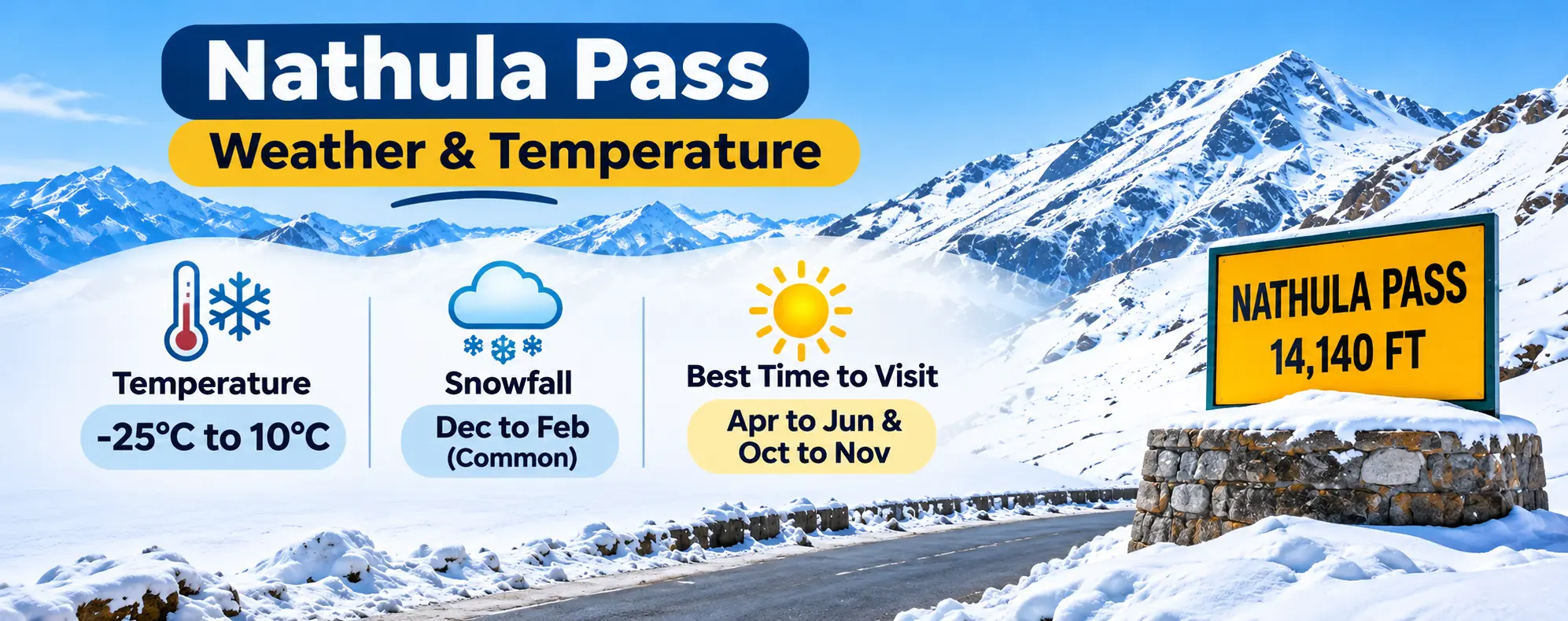
The weather here is nothing like Gangtok's, so it pays to plan. This guide covers Nathula Pass weather month by month, snowfall, the best time to visit, what to wear, and the practical details most weather guides skip: permits, visiting days, timings and altitude sickness.
Nathula Pass Temperature Throughout the Year
Nathula Pass has extremely cold winters and cool, damp summers. Rain, snow and wind change how cold it actually feels. Even in the warmest months, you will need warm clothes because of the altitude.
The figures below are broad seasonal averages. They are not a forecast, and the temperature on your travel date can be different.
Nathula Pass Monthly Temperature Chart
| Month | Average High | Average Low |
|---|---|---|
| January | -8°C | -28°C |
| February | -7°C | -25°C |
| March | -3°C | -14°C |
| April | -1°C | -5°C |
| May | 3°C | 0°C |
| June | 5°C | 2°C |
| July | 7°C | 3°C |
| August | 10°C | 4°C |
| September | 8°C | 2°C |
| October | 6°C | -5°C |
| November | 1°C | -10°C |
| December | -6°C | -20°C |
Source: approximate historical climate averages. These are not a live forecast. Check the current weather before you travel.
Also visit nearby: Nathu La, one of the most popular attractions in East Sikkim.
Gangtok Nathula PassNathula Pass Weather Month by Month
January and February: Extreme Winter Cold
These are the coldest months. Temperatures fall far below freezing, and heavy snow can cover the mountains and the road. Strong winds make it feel even colder.
The snowy landscape is beautiful, but access is the problem. Heavy snowfall often leads to road blockages and temporary restrictions on tourist movement, so the pass may be closed on some days.
Travel advice: Pack heavy winter jackets, thermal wear, gloves, woollen socks and snow-grip shoes. Confirm road status and permit availability with your travel agency before leaving Gangtok.
March and April: Cold, but Getting Better
March is still very cold, and snow remains on the slopes and beside the road. By April, daytime weather is more pleasant, though mornings and evenings stay cold and light snowfall is still possible. Leftover snow is usually visible until around the third week of April.
Travel advice: April is a good choice if you want snow and a reasonably open road. Carry proper winter clothing.
May and June: Milder Weather
Temperatures rise and sightseeing is more comfortable on clear days. Some snow patches may remain at higher spots, depending on the previous winter. Rain and cloud cover increase through June.
Travel advice: May to early June works well for sightseeing. Carry a warm jacket, comfortable shoes and rain protection.
July, August and September: Monsoon Season
Rain, thick fog and poor visibility are common. Roads can turn slippery, and landslides may block the route. September is a transition month: rain slowly reduces, but clouds and showers continue.
Travel advice: These months are not ideal if you want clear mountain views. Check weather and road updates before you plan a trip.
October and November: Clearer Mountain Views
The monsoon moves away and the skies often clear, giving good views of the Himalayas. Temperatures start dropping again, especially in the mornings and evenings. November is colder than October, and early snowfall is possible.
Travel advice: October is great for sightseeing and photography. November suits travellers who enjoy cold mountain weather.
December: Start of Severe Winter
Freezing temperatures return and snowfall becomes more likely. The mountains look stunning under snow, but heavy snowfall can disrupt the road and lead to temporary restrictions.
Travel advice: Keep your plans flexible and have a backup itinerary in Gangtok.
Which Month Is Best to Visit Nathula Pass?
It depends on what you want from the trip. Most travel guides recommend April to mid-June and October to November as the most favourable periods.
• April to June: Pleasant sightseeing, cool weather, and a chance of leftover snow in April.
• October to November: Clear skies, mountain views and good photography.
• January to February: Deep snow and winter scenery, but travel is difficult and the pass may close.
• July to September: Least suitable because of rain, fog and landslide risk.
Does Nathula Pass Get Snowfall All Year?
No. Fresh snowfall is most common from December to February. Snow can stay on the slopes through March and April, and a few patches may linger into early summer.
If snow is your main goal, January and February give you the best chance of fresh snowfall, but road closures are also most likely then. For snow with easier access, April is usually the safer choice.
Nathula Pass vs Gangtok Temperature
Gangtok is at a much lower elevation, so it is far warmer. You can enjoy mild weather in Gangtok and still face freezing wind within a couple of hours at Nathula Pass. Never pack according to Gangtok's weather alone.
What to Carry for Nathula Pass
Wear layers rather than one heavy jacket. Even in summer, you will need:
• A heavy winter jacket for the wind
• Thermal innerwear
• Woollen gloves and a cap
• Warm socks and comfortable, grippy shoes
• A waterproof jacket for rain and snow
• Sunglasses, as the sunlight is strong at this altitude
• Your permit and valid photo ID
Permit, Visiting Days and Timings
Nathula Pass is a protected border area, so these rules matter as much as the weather.
• Who can visit: Only Indian nationals with a valid permit are allowed. Foreign nationals cannot visit the pass.
• Visiting days: The pass is open Wednesday to Sunday. It is closed on Mondays and Tuesdays.
• Permit: It is usually arranged through a registered travel agency or the Sikkim Tourism Department, ideally a day in advance. Carry a valid government photo ID, and ask your agency which IDs are accepted. Fees and vehicle charges change, so confirm the current cost.
• Timings: Go early. The pass often closes to tourists by early afternoon, usually between 1:30 PM and 3 PM depending on the day and conditions.
• Photography: Photography is restricted at the pass. Follow the instructions of the army personnel there.
Rules and timings can change, so confirm the latest details with your agency or Sikkim Tourism before you travel.
Altitude Sickness at Nathula Pass
At around 14,000 feet, the air has much less oxygen. Some visitors feel headache, dizziness, breathlessness or nausea.
• Spend a day or two in Gangtok first to adjust.
• Walk slowly, drink water and avoid heavy meals.
• Do not stay long if you feel unwell, and go down immediately if symptoms get worse.
• Children, older travellers and people with heart or blood pressure problems should check with a doctor before going.
How Does Weather Affect the Road to Nathula Pass?
Snowfall, rain, fog and landslides can all affect the road, and authorities may restrict tourist movement for safety, sometimes without notice. Check road status and weather with your travel agency before you start, and follow official instructions.
Planning a trip to Sikkim? Explore our ready-made package covering Gangtok and nearby attractions.
Sikkim Gangtok Tour Package